Motorcycle Training in 2026: Practical and Theoretical Options and Modalities
28/04/2026
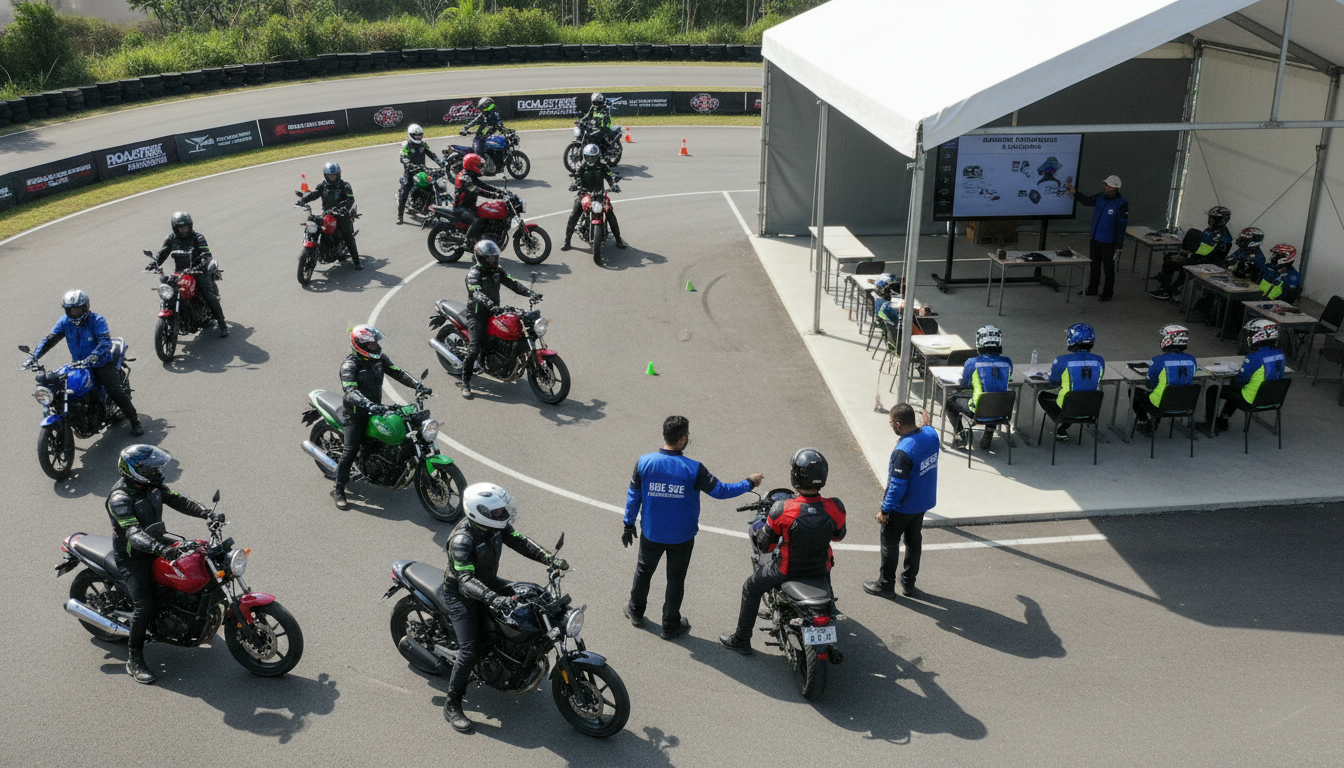
En bref, ce que vous allez découvrir dans cet article : les différentes options de formation moto pour apprendre à conduire en toute sécurité, les formats théoriques et pratiques, ainsi que les critères pour choisir une école fiable. Vous trouverez aussi des conseils pour financer votre apprentissage et préparer votre permis moto efficacement.
1. Pourquoi choisir une formation moto adaptée
Opter pour une formation moto adaptée est essentiel pour garantir la sécurité à moto, respecter la légalité et gagner en confiance. Une bonne formation vous prépare à affronter la route avec les bonnes techniques de pilotage moto, réduisant ainsi les risques d’accidents. De plus, elle vous permet d’obtenir le permis moto nécessaire pour circuler légalement.
Investir dans une formation complète, alliant théorie et pratique, vous offre un cadre sécurisé pour progresser à votre rythme. Cela facilite aussi la compréhension des règles spécifiques aux deux-roues, indispensables pour rouler sereinement.
2. Les types de formation moto disponibles
2.1 Formation initiale (permis A1/A2/A) : contenu et exigences
Les formations initiales varient selon la catégorie de permis :
- Permis A1 : accessible dès 16 ans, permet de conduire une moto 125 cm³. La formation comprend 20 heures minimum, réparties en 8 heures de plateau et 12 heures de circulation.
- Permis A2 : pour les motos jusqu’à 35 kW, accessible dès 18 ans, avec un minimum de 20 heures de formation pratique.
- Permis A : pour les motos puissantes, accessible à partir de 24 ans ou après deux ans de permis A2.
Chaque formation inclut l’épreuve théorique moto (ETM), qui consiste en 40 questions sur des thématiques comme la circulation, la sécurité, et la mécanique. Cette épreuve se déroule sur tablette avec des questions audio et vidéo personnalisées, un format moderne et adapté aux motards[1].
2.2 Formations accélérées vs formation classique : avantages et contraintes
Les formations accélérées permettent d’obtenir le permis rapidement, souvent en quelques semaines, avec un rythme intensif. Elles conviennent aux personnes disponibles sur une courte période. En revanche, la formation classique, étalée sur plusieurs mois, offre plus de temps pour assimiler les techniques et gagner en confiance.
2.3 Formations complémentaires (post-permis, perfectionnement, sécurité avancée)
Après le permis, il est conseillé de suivre des stages de conduite moto pour améliorer ses compétences. Ces formations complémentaires incluent :
- Stages de perfectionnement pour maîtriser les techniques avancées.
- Ateliers de sécurité pour apprendre à gérer les situations d’urgence.
- Formations spécifiques pour motos électriques ou autres catégories.
3. Format et pédagogie : comment se déroule une formation
3.1 Théorie (contenu, formats en ligne/hybride)
La partie théorique couvre 9 thématiques essentielles, dont la réglementation, la sécurité, et les premiers secours. Elle peut se suivre en présentiel, en ligne ou en format hybride. Certaines écoles proposent des révisions accélérées ou traditionnelles, adaptées au rythme de chaque élève[7].
3.2 Pratique (exercices obligatoires, plateau, circulation)
La formation pratique comprend :
- Exercices sur plateau : maniabilité, freinage, slalom.
- Circulation : conduite en conditions réelles, en ville et sur route.
La durée minimale est de 20 heures, avec un équilibre entre plateau et circulation. Le formateur adapte les séances selon les progrès de l’apprenant.
3.3 Outils pédagogiques modernes (vidéo, télémétrie, simulateurs)
Pour optimiser l’apprentissage, certaines écoles intègrent des outils innovants :
- Vidéos explicatives et démonstratives.
- Simulateurs de conduite pour s’exercer en toute sécurité.
- Télémétrie pour analyser les performances et corriger les erreurs.
4. Choisir sa formation : critères de qualité
4.1 Qualifications des instructeurs et accréditations
Privilégiez une école avec des moniteurs diplômés et une accréditation officielle. Cela garantit un enseignement conforme aux normes et une meilleure préparation à l’examen.
4.2 Taux de réussite, avis, ratio élèves/moniteur
Un bon indicateur est le taux de réussite au permis moto. Consultez aussi les avis d’anciens élèves et vérifiez que le ratio élèves/moniteur permet un suivi personnalisé.
4.3 Coût, durée et disponibilité (intensif vs étalé)
Comparez les tarifs en fonction de la durée et du format. Les formations intensives sont souvent plus coûteuses mais plus rapides. Les formations étalées offrent plus de flexibilité.
5. Financement et aides
5.1 CPF, aides locales, dispositifs employeur
Le financement de la formation peut être facilité grâce au Compte Personnel de Formation (CPF), à des aides régionales ou à des dispositifs proposés par l’employeur.
5.2 Exemples de budgets et simulations de coût
Le coût moyen d’une formation complète varie entre 1000 € et 1500 €, selon la catégorie et la région. Il est conseillé de demander des devis et de simuler les aides possibles.
6. Spécificités à aborder pour se différencier
6.1 Formations pour motos électriques
Certaines écoles proposent désormais des formations adaptées aux motos électriques, avec un focus sur les particularités techniques et la conduite.
6.2 Programmes dédiés femmes et pédagogies inclusives
Des programmes spécifiques favorisent l’apprentissage des femmes, avec une pédagogie adaptée pour encourager la confiance et la sécurité.
6.3 Ateliers maintenance et préparation du véhicule
Des ateliers pratiques sur l’entretien de base et la préparation de la moto complètent la formation, indispensables pour voyager en toute sérénité.
7. Aspects pratiques et administratifs
7.1 Parcours pour obtenir le permis selon les catégories (A1/A2/A)
Le parcours comprend :
- Inscription à l’ETM.
- Réussite de l’épreuve théorique.
- Formation pratique obligatoire.
- Passage de l’examen pratique.
7.2 Assurance pendant la formation et responsabilités
Pendant la formation, l’assurance de l’élève est obligatoire. L’école doit fournir une couverture adaptée, garantissant la responsabilité civile en cas d’accident.
8. Conseils après la formation
8.1 Parcours de progression post-permis (stages, perfectionnement)
Pour continuer à progresser, il est recommandé de suivre des stages de conduite moto, qui renforcent les acquis et améliorent la maîtrise.
8.2 Entretien de base et checklist avant chaque sortie
Avant chaque sortie, vérifiez :
- Le niveau d’huile et de carburant.
- La pression des pneus.
- Le bon fonctionnement des freins et des éclairages.
Pour approfondir la préparation avant de partir en voyage, consultez notre guide complet sur la révision moto avant voyage.
9. Conclusion
La formation moto est une étape clé pour rouler en toute sécurité et obtenir le permis moto. En choisissant une école qualifiée et un format adapté, vous maximisez vos chances de réussite et votre plaisir de conduite. N’hésitez pas à comparer les offres et à profiter des aides pour financer votre apprentissage.
Pour aller plus loin, découvrez nos conseils pour bien choisir votre équipement moto voyage et préparer votre premier périple à deux-roues.
[1] Découvrez les spécificités de l’épreuve théorique moto sur Ornikar.
[2] Comparez les formations pour chaque catégorie de permis moto avec Easy Monneret.
[7] Consultez les modalités de formation au permis moto A2 sur le site de l’ECF.
[9] En savoir plus sur la formation de 7 heures pour les conducteurs titulaires du permis B sur Sécurité Routière.

Marc Durand
Motard passionné et voyageur chevronné, je parcours les routes d'Europe et d'ailleurs depuis plus de quinze ans à moto. Cette expérience m'a permis de découvrir les itinéraires les plus emblématiques ainsi que les astuces indispensables pour préparer un road trip réussi. Sur 2motospouruntourdumonde.com, je partage conseils pratiques, comparatifs de motos adaptées au voyage et récits d'aventures pour accompagner tous les passionnés, du novice au motard confirmé. Mon objectif est d'aider les lecteurs à vivre pleinement leur passion du voyage à deux-roues en toute sérénité et avec plaisir.