How to Choose Motorcycle Gear for a 2026 Trip
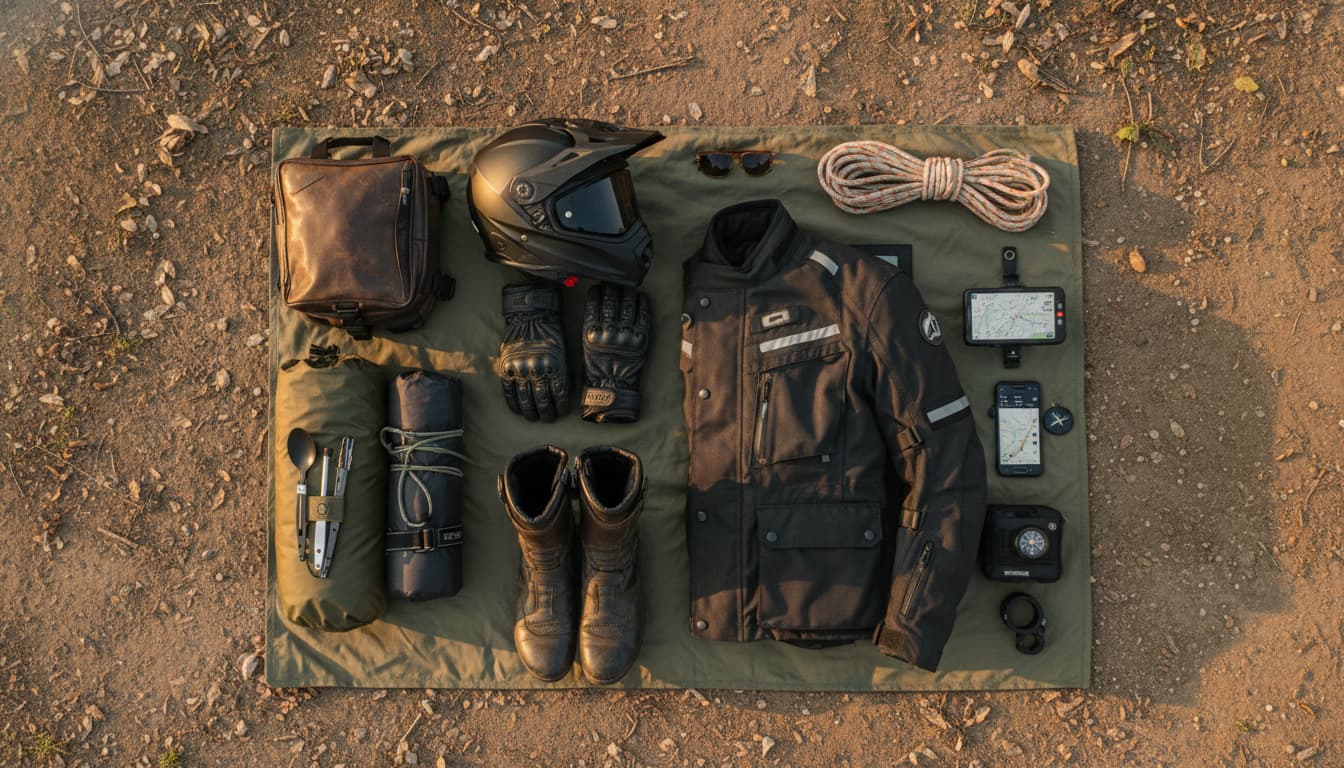
In short, what you'll find in this article: essential advice for choosing the motorcycle travel gear suited to your road trip. From helmets to luggage, including protective gear and tools, optimize your comfort and safety to fully enjoy the adventure.
1. Introduction: why gearing up properly for a motorcycle trip matters
Setting off on a motorcycle trip requires thorough preparation. Good gear not only ensures your safety but also your comfort against weather challenges and long hours on the road. Without suitable equipment, you risk fatigue, injuries, or incidents that could spoil your journey. Proper gear also means anticipating the unexpected and fully enjoying every leg of your trip.
2. Choosing your safety gear
2.1 The helmet: types, certifications, visors, and maintenance
The helmet is the most crucial element of motorcycle travel gear. Choose a full-face helmet certified ECE 22.06, the latest standard ensuring safety and comfort. Helmets with photochromic visors adapt to light conditions, improving visibility. Regularly maintain the visor and shell to prevent scratches and deformations.
2.2 Jacket and protections: materials, breathability, CE protections
A waterproof motorcycle jacket must provide good rain protection while remaining breathable. Materials like Gore-Tex are recommended. Make sure the jacket includes CE protections on elbows, shoulders, and back. Jackets may also have removable inserts to adapt to temperature changes.
2.3 Gloves: choosing by season and use
Reinforced motorcycle gloves are essential to protect your hands. In summer, opt for ventilated models; in winter, go for insulated and waterproof gloves. The choice should also consider the dexterity needed to operate the bike and its accessories.
2.4 Shoes/boots: waterproofing, reinforcements, comfort
Comfortable motorcycle boots should provide good ankle support, reinforcements on toes and heel, and a non-slip sole. Waterproofing is key to avoid wet feet, which cause discomfort and chilling.
2.5 Additional protections: back protectors, knees, hip guards
A motorcycle back protector is strongly recommended, especially for long rides. Complete your gear with knee and hip protections, often integrated in reinforced riding pants. These elements significantly increase your safety in case of falls.
3. Luggage and packing organization
3.1 Types: hard cases, soft bags, saddlebags, duffels, tank bags
For carrying your belongings, several options are available:
- Hard cases for optimal protection
- Soft bags for more flexibility
- Side saddlebags or tank bags for quick access
- Duffel bags for bulky equipment
3.2 How to choose based on your bike and trip duration
Choice depends on your bike’s carrying capacity and trip length. For short road trips, a motorcyclist's backpack or a tank bag often suffices. For long distances, favor hard cases that offer better protection for your gear.
3.3 Mounting, waterproofing, and anti-theft
Ensure your luggage is securely mounted, rain-resistant, and equipped with effective anti-theft mechanisms. Good waterproofing prevents unpleasant surprises, especially during rainy stretches.
4. Clothing and layering strategy
4.1 Base layer, insulation, windproof/waterproof
Adopt a layering strategy to adapt to changing weather:
- Breathable base layer to wick away sweat
- Insulating layer to retain heat
- Windproof and waterproof layer to shield you from the elements
4.2 Tips for drying and odor control
Choose technical clothing that dries quickly and limits odors. Use waterproof bags to isolate wet clothes and regularly air your gear.
5. Electronics and navigation
5.1 Dedicated GPS vs smartphone + apps
A motorcycle GPS offers precise navigation and better visibility while riding. However, a smartphone with specialized apps may suffice for less complex routes. Choose based on your budget and needs.
5.2 Mounts, chargers, batteries, and power management
Invest in a sturdy, waterproof mount to secure your GPS or smartphone. Carry suitable chargers, power banks, and cables to ensure enough battery life throughout the day.
6. Tools, spare parts, and maintenance on the road
6.1 Puncture repair kit and quick fixes
A puncture repair kit is essential to handle the unexpected. It should include patches, tire levers, a compact pump, and zip ties.
6.2 Minimal tool kit and common spare parts to bring
Bring a compact tool kit with wrenches, screwdrivers, pliers, and some spare parts like fuses, bulbs, and cables. This will enable basic repairs on the road.
6.3 Checks and maintenance routine during travel
Adopt a daily routine for checks: tire pressure, oil level, brake condition, and lighting. These simple steps prevent many issues.
7. Camping and bivouac gear
7.1 Tent, sleeping bag, mattress, lightweight stove
For camping motorcyclists, prioritize light and compact gear: easy-to-pitch tent, season-appropriate sleeping bag, inflatable mattress, and portable stove.
7.2 Packing tips to reduce volume and weight
Use compression bags and distribute weight evenly to avoid unbalancing the motorcycle. Every gram counts for comfort and handling.
8. Administrative preparation and document security
8.1 Insurance, license, registration, health cards, visas
Before leaving, check that your documents are current: driver’s license, motorcycle insurance, registration card, European health insurance card, and visas if needed.
8.2 Anti-theft security, trackers, local document storage
Protect important documents with digital copies stored on secure cloud services. Also consider effective locks and a GPS tracker for your motorcycle.
9. Tips according to the type of trip
9.1 Long-distance touring
For long trips, favor robust, comfortable, and modular gear with spacious luggage and a high-performance GPS.
9.2 Adventure/off-road
Gear should be reinforced, lightweight, and suited for rough terrains, with extra protections and a complete repair kit.
9.3 Short road trips/weekends
For short stays, choose lighter, more compact gear for easier mobility and packing.
10. Budget, buying criteria, and product recommendations
To choose your motorcycle travel gear well, set a realistic budget based on quality and durability. Prioritize safety and comfort. Among recommended brands, some stand out for reliability and innovation, especially for helmets and luggage. Don’t hesitate to check specialized comparisons to refine your choice.
11. Downloadable/printable checklist by scenario (solo, duo, off-road)
Here is a simplified list to prepare your gear:
- Certified helmet and spare visor
- Waterproof jacket with CE protection
- Season-appropriate gloves
- Comfortable, waterproof boots
- Back, knee, and hip protections
- Luggage suitable for your motorcycle
- Technical layered clothing
- Motorcycle GPS or smartphone with mount
- Puncture repair kit and minimal tool kit
- Lightweight camping gear (if needed)
- Up-to-date administrative documents
- Locks and GPS tracker
Download a complete customizable checklist at 2motospouruntourdumonde.com to make sure you don’t forget anything.
12. Conclusion
Choosing your motorcycle travel gear wisely is the key to a successful, safe, and comfortable road trip. By following these tips, you reduce risks and maximize your enjoyment on the road. For more details, explore our full guide on motorcycle trip preparation and equip yourself with the best recommended products.
For deeper insight, the detailed guide by Oovango on essential gear for long motorcycle journeys offers valuable expertise on indispensable tools and protection.