Motorcycle Mechanical Study: Optimize Stress and Performance 2026
13/04/2026
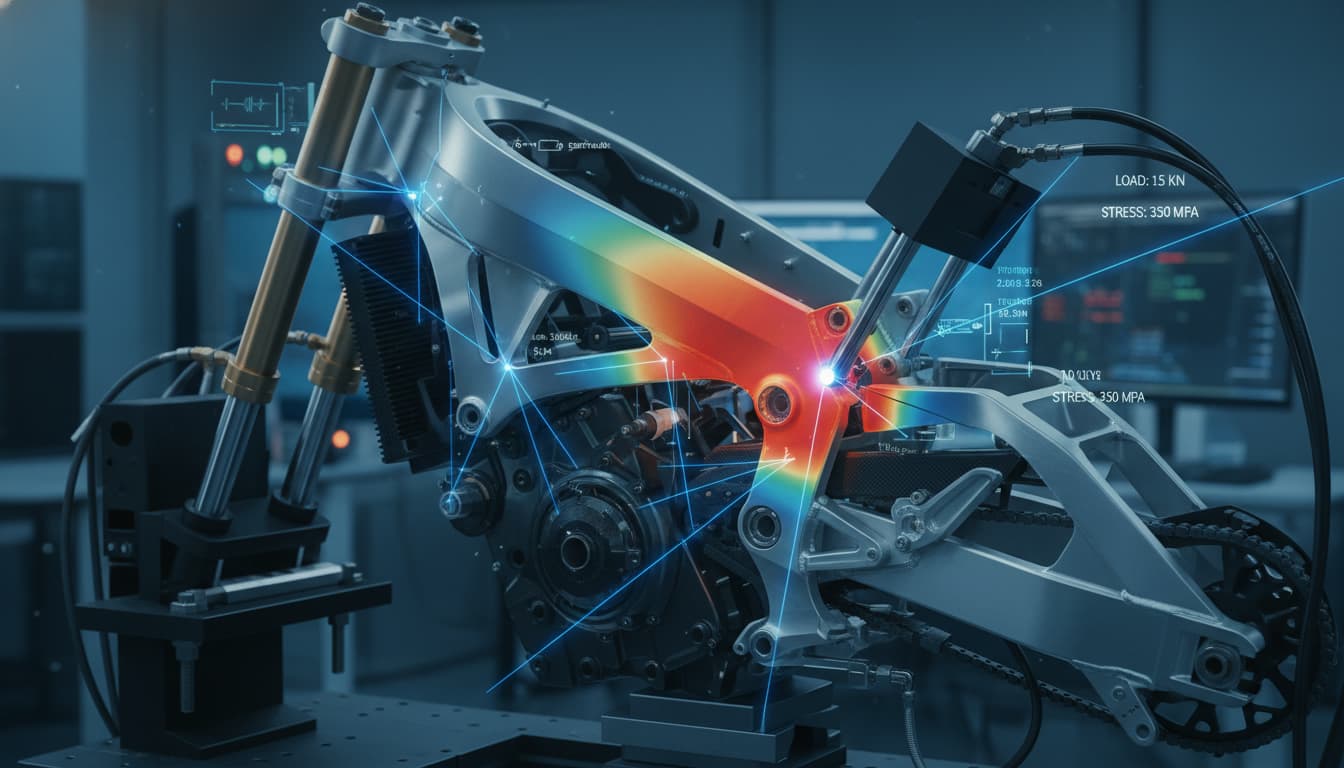
En bref, ce que vous allez découvrir dans cet article : les principes clés de l’étude mécanique moto, ses objectifs, méthodes et outils pour analyser et optimiser la performance et la sécurité de votre moto. Vous apprendrez à décortiquer chaque composant, à utiliser la simulation et les tests pratiques, et à prioriser vos réparations pour un entretien efficace.
1. Introduction — Qu'est-ce qu'une étude mécanique moto et pourquoi la réaliser
L’étude mécanique moto consiste à analyser les contraintes et le comportement des pièces mécaniques sous diverses conditions d’utilisation. Elle vise à garantir la sécurité, la durabilité et la performance optimale de la moto. Que vous soyez passionné ou mécanicien amateur, comprendre ces analyses vous permet d’anticiper les pannes, d’améliorer votre machine et d’éviter des frais inutiles.
Cette démarche est essentielle pour maîtriser la maintenance mécanique moto et réduire la dépendance aux professionnels. Elle s’appuie sur des principes physiques et mathématiques, notamment le calcul des contraintes moto et la modélisation mécanique moto, pour évaluer la résistance des matériaux moto.
2. Objectifs d'une étude mécanique
2.1 Vérification de sécurité
L’objectif premier est d’assurer la sécurité du pilote en détectant les faiblesses structurelles ou fonctionnelles. Cela implique le contrôle qualité mécanique moto, la recherche de fissures, de corrosion ou d’usure excessive, et la validation des performances des systèmes critiques comme le freinage et la suspension.
2.2 Diagnostic de performance
L’étude permet aussi d’optimiser les performances mécaniques moto. Par exemple, l’analyse mécanique des pièces de moto révèle les points de friction ou de déformation, tandis que la simulation mécanique moto aide à prévoir le comportement sous charge.
2.3 Préparation à la vente / achat
Enfin, une étude complète facilite l’évaluation de la durabilité des composants moto avant une transaction. Elle donne une vision claire de l’état réel de la moto, évitant les mauvaises surprises.
3. Méthodologie générale (procédé étape par étape)
3.1 Inspection visuelle et prise de notes (checklist téléchargeable)
La première étape consiste en une inspection visuelle minutieuse. Il faut vérifier l’état général, noter les anomalies visibles, fissures, traces d’usure ou corrosion. Une checklist bien conçue facilite ce processus.
3.2 Essais routiers standardisés (procédure et paramètres à observer)
Ensuite, des essais routiers permettent d’observer le comportement dynamique : tenue de route, réponse moteur, freinage, vibrations. Ces tests doivent suivre un protocole précis pour être reproductibles.
3.3 Mesures instrumentées (capteurs, enregistrement et interprétation)
L’utilisation de capteurs (accéléromètres, capteurs de pression, thermocouples) permet de collecter des données précises sur les contraintes et vibrations en conditions réelles. L’interprétation de ces mesures est cruciale pour un diagnostic approfondi.
3.4 Tests sur banc (moteur, embrayage, transmission) — protocole et métriques
Les tests sur banc offrent un environnement contrôlé pour évaluer la puissance moteur, l’efficacité de l’embrayage et la transmission. Ils mesurent des paramètres comme la compression, le couple et les pertes mécaniques.
3.5 Modélisation et simulation (CAD/FEM) — quand et comment l'utiliser
La modélisation mécanique moto via des logiciels CAD et la simulation par éléments finis (FEM) permettent d’anticiper les contraintes internes et les points faibles sans démontage. Cette étape est recommandée pour les projets d’optimisation avancée.
4. Analyse composant par composant
4.1 Moteur (compression, lubrification, usure interne)
L’étude mécanique du moteur porte sur la compression des cylindres, la qualité de la lubrification et l’usure des pièces mobiles. Ces analyses préviennent les défaillances majeures et optimisent la performance.
4.2 Transmission et embrayage
La transmission doit être contrôlée pour éviter les pertes de puissance. L’embrayage est analysé pour détecter l’usure des disques et garantir un passage fluide des vitesses.
4.3 Suspension et géométrie de la direction
L’étude des suspensions et de la géométrie de la direction assure la stabilité et le confort. Le contrôle des amortisseurs et des angles de chasse est essentiel pour la sécurité.
4.4 Freinage (usure, performance, équilibre avant/arrière)
Les freins sont inspectés pour leur usure, leur efficacité et l’équilibre entre l’avant et l’arrière, garantissant un freinage sûr et progressif.
4.5 Cadre et fixation des éléments (contrôle de fissures et corrosion)
Le cadre supporte toutes les contraintes. Son contrôle visuel et par ultrasons détecte fissures et corrosion, évitant des ruptures catastrophiques.
5. Études spécifiques et cas pratiques
5.1 Diagnostic par bruit/vibration (exemples et interprétations)
L’analyse des bruits et vibrations révèle souvent des défauts internes. Par exemple, un bruit métallique peut indiquer un roulement usé. Ces diagnostics sont précieux pour la maintenance mécanique moto.
5.2 Étude thermique et gestion du refroidissement
La gestion thermique est cruciale pour éviter la surchauffe. L’étude porte sur le circuit de refroidissement, la dissipation de chaleur et la prévention des points chauds.
5.3 Analyse de la consommation et optimisation
L’évaluation de la consommation permet d’optimiser le rendement moteur et d’identifier des pertes énergétiques.
6. Outils, équipements et budget nécessaire
6.1 Outils de base pour inspection
- Clés dynamométriques
- Jauges d’usure
- Lampes d’inspection
6.2 Instruments de mesure recommandés
- Capteurs de pression et température
- Accéléromètres
- Analyseurs de vibrations
6.3 Logiciels de modélisation et d'acquisition de données
- Logiciels CAD/FEM pour la modélisation mécanique moto
- Logiciels d’acquisition et d’analyse des données instrumentées
7. Recommandations et plan d'action (priorisation des réparations et améliorations)
Pour optimiser la maintenance mécanique moto, il est conseillé de :
- Prioriser les réparations liées à la sécurité (freins, cadre).
- Corriger les défauts affectant la performance (embrayage, moteur).
- Planifier les améliorations pour la durabilité (lubrification, suspensions).
Cette approche garantit un entretien efficace et une meilleure longévité de votre moto.
8. Annexes et ressources
8.1 Fiches de contrôle téléchargeables
Des fiches pratiques facilitent l’inspection régulière des composants.
8.2 Protocoles de test détaillés
Des guides méthodologiques pour les essais routiers et bancs.
8.3 Bibliographie et normes utiles
Pour approfondir, la formation de Technicien de préparation et d'exploitation de véhicules de compétition moto offre un excellent cadre théorique et pratique.
9. Conclusion
L’étude mécanique moto est un outil indispensable pour tout motard souhaitant maîtriser l’entretien et l’optimisation de sa machine. En combinant inspections, tests et simulations, vous gagnez en autonomie et sécurité. Pour aller plus loin, découvrez nos conseils pour préparer votre moto au voyage dans notre article sur la préparation voyage moto.

Marc Durand
Motard passionné et voyageur chevronné, je parcours les routes d'Europe et d'ailleurs depuis plus de quinze ans à moto. Cette expérience m'a permis de découvrir les itinéraires les plus emblématiques ainsi que les astuces indispensables pour préparer un road trip réussi. Sur 2motospouruntourdumonde.com, je partage conseils pratiques, comparatifs de motos adaptées au voyage et récits d'aventures pour accompagner tous les passionnés, du novice au motard confirmé. Mon objectif est d'aider les lecteurs à vivre pleinement leur passion du voyage à deux-roues en toute sérénité et avec plaisir.