Motorcycle Mechanic CAP Apprenticeship Training: Format and Career Opportunities 2026
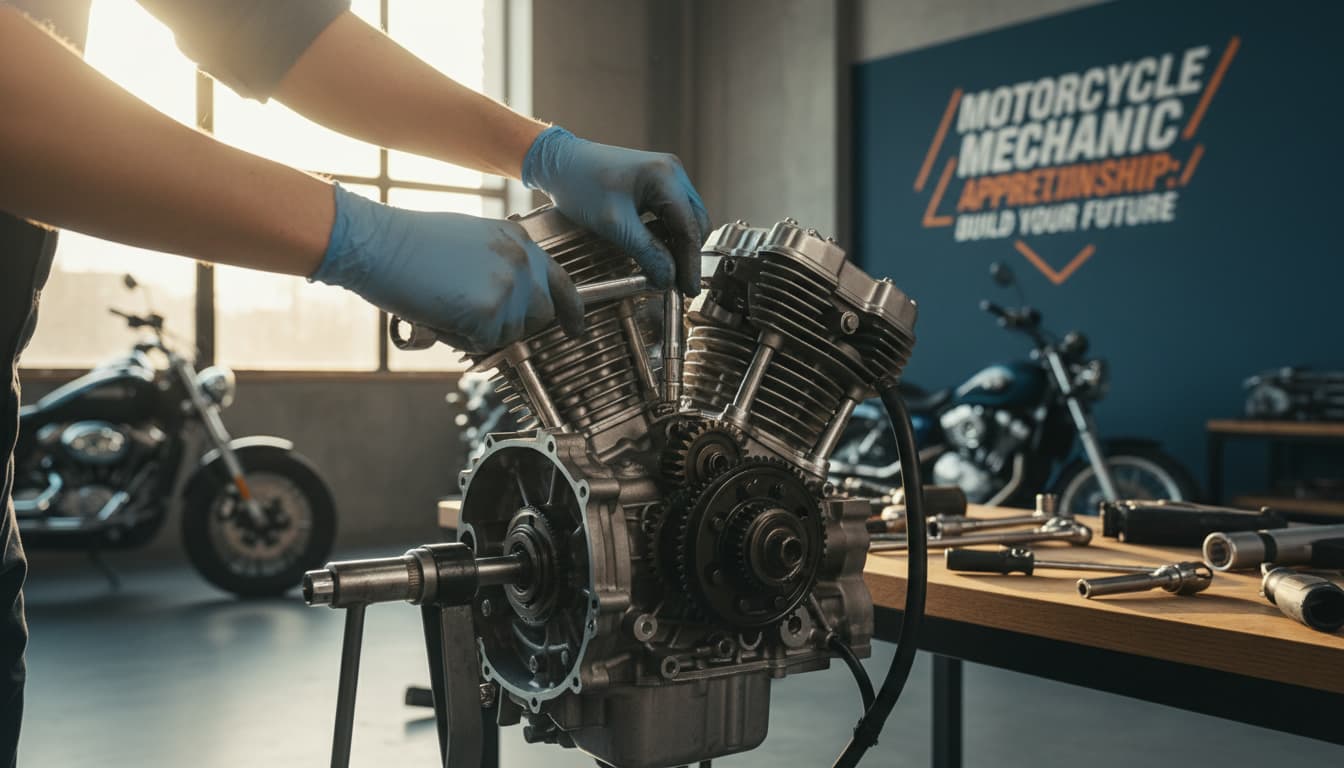
In short, what you will discover in this article: the keys to succeeding in your Motorcycle Mechanic CAP Apprenticeship, from the training to career opportunities, including the contract, finding a company, and daily workshop life. A comprehensive guide to combining theory and practice to start your career as a motorcycle mechanic.
1. Introduction: Why Choose a Motorcycle Mechanic CAP Apprenticeship
Choosing the Motorcycle Mechanic CAP Apprenticeship allows you to combine theoretical learning with professional experience. This training offers an ideal balance between classroom courses and immersion in a company, essential for mastering motorcycle maintenance. You gain solid expertise while being paid, which facilitates your integration into the motorcycle mechanic profession.
This path is especially suited for those who prefer hands-on learning over just classroom study, while building a professional network from the start.
2. What is the Motorcycle Mechanic CAP (Goals and Content)
The Motorcycle Mechanic CAP diploma trains technicians capable of performing maintenance, repair, and diagnostics on powered two-wheelers. It aims to develop precise technical skills while incorporating safety, environmental, and customer relations knowledge.
2.1 Duration, Schedule, and Training Organization (School/Company Rhythm)
The CAP duration generally ranges from 1 to 3 years depending on your profile and the training center. For example, CFA Atelier des Chefs offers an apprenticeship with theoretical courses at the center and practical workshops combined with work in a company. The typical schedule is often:
- Two weeks in the company
- One week in the training center
Other centers, like Campus Sud des Métiers, propose the opposite rhythm (1 week center / 2 weeks company). This organization encourages gradual immersion into the profession.
2.2 Skills Targeted at the End of the CAP
At the end of the training, you will be able to:
- Perform routine maintenance and corrective work on motorcycles
- Diagnose mechanical and electronic faults
- Dismantle and reassemble engines and mechanical components
- Apply safety and hygiene rules in the workshop
- Advise customers on vehicle use and maintenance
These skills make you immediately operational in a motorcycle repair workshop.
3. Apprenticeship: How It Works (Status, Contract, Remuneration)
The apprenticeship is based on a contract between the apprentice, the company, and the training center. This contract may be an apprenticeship contract or a professionalization contract, each with its specifics.
3.1 Difference Between Apprenticeship and Professionalization
- Apprenticeship contract: intended for young people aged 16 to 29, combining training and work in a company with educational follow-up.
- Professionalization contract: also open to job seekers and employees, aiming for rapid integration or professional retraining.
Both contracts allow you to follow motorcycle apprenticeship training while being an employee.
3.2 Average Remuneration and Evolution by Age/Year
Salary ranges from 27% to 100% of the minimum wage (SMIC) depending on age and training year. For example, an 18-year-old apprentice in the first year may earn about 40% of the SMIC, while an adult in the final year can reach the legal minimum wage. This remuneration is a significant advantage to finance your training.
4. Finding a Company for Apprenticeship (Concrete Method)
Looking for a motorcycle apprenticeship contract requires method and preparation. Here’s how to proceed:
- Write a clear CV highlighting your motivation and initial experiences.
- Write a personalized cover letter for each company, emphasizing your interest in motorcycle mechanics and apprenticeship.
4.1 Creating a CV and Letter for a Workshop Position (Examples)
Your CV should include:
- Your full contact details
- Your educational level and ongoing training
- Your technical skills (e.g., engine dismantling, electronic diagnostics)
- Your experiences, even non-professional (internships, projects)
- Your interests related to motorcycles
The letter should explain why you want to join the Motorcycle Mechanic CAP Apprenticeship and what you will bring to the workshop.
4.2 Where to Look: Platforms, CFA Centers, Job Fairs, Networks
- Specialized apprenticeship offer platforms
- Training centers such as CFA Atelier des Chefs
- Apprenticeship fairs and career forums
- Professional networks and personal contacts
A proactive search multiplies your chances of finding a suitable company.
5. Daily Workshop Life: Tasks and Practical Skills
Work in the workshop is varied and hands-on. You will be involved in:
- Performing periodic motorcycle maintenance (oil changes, adjustments)
- Diagnosing mechanical and electrical faults
- Repairing or replacing defective parts
- Conducting safety and compliance checks
5.1 List of Common Interventions
- Engine and transmission overhaul
- Brake and suspension adjustments
- Electronic diagnostics and electrical system repairs
- Tire and chain maintenance
5.2 Essential Tools and Equipment for the Apprentice
- Open-end and adjustable wrenches
- Screwdrivers and pliers
- Multimeter for electrical diagnostics
- Personal protective equipment (gloves, goggles)
These tools are essential for acquiring motorcycle mechanic skills.
6. Exams and CAP Validation (Theoretical and Practical Tests)
The CAP is validated through exams combining theory and practice. You will take written tests on motorcycle technology as well as practical tests in the workshop, such as disassembly/reassembly or diagnostics.
6.1 Tips to Succeed in the Practical Test
- Practice regularly on real cases in the workshop
- Master technical gestures and tools
- Take care with your organization and work method
- Stay calm and focused during the test
Good preparation increases your chances of success.
7. Career Opportunities and Further Studies After the CAP
The Motorcycle Mechanic CAP opens several opportunities:
- Immediate employment as a motorcycle mechanic in a garage or dealership
- Progression towards a Vocational Baccalaureate in Vehicle Maintenance with Motorcycle Option
- Preparation of a Professional Qualification Certificate (CQP) to specialize further
These pathways allow you to move toward responsible positions or broaden your skills.
8. Financial Aid and Support Programs for Apprentices
Apprentices often benefit from aids like:
- Remuneration during training
- Training costs covered by the company
- Specific regional or national aids for young people in apprenticeships
These programs facilitate access to training and reduce expenses.
9. Testimonials and Practical Cases
- Lucas, 18 years old, apprentice at CFA Atelier des Chefs: “The apprenticeship allowed me to learn quickly and be operational by the end of my training.”
- Sophie, trainer, explains: “Practical workshops are essential so young people master the technical gestures.”
- Partner company, motorcycle garage: “We train our apprentices to become competent and autonomous mechanics.”
These feedbacks illustrate the richness of apprenticeship.
10. Conclusion and Call to Action
The Motorcycle Mechanic CAP Apprenticeship is an excellent path to learn a passionate trade while gaining solid professional experience. To succeed, start by contacting a recognized CFA, carefully prepare your application, and be active in your company search. Don’t wait any longer to embark on this enriching professional adventure!
To learn more about the training and apply, visit CFA Atelier des Chefs - Motorcycle Mechanic CAP Apprenticeship.
Are you also preparing for a future motorcycle trip? Discover our tips for choosing your bike in the article motorcycle for world tour and gear up efficiently thanks to our guide motorcycle travel equipment.