Essential Motorcycle Gear to Choose in 2026
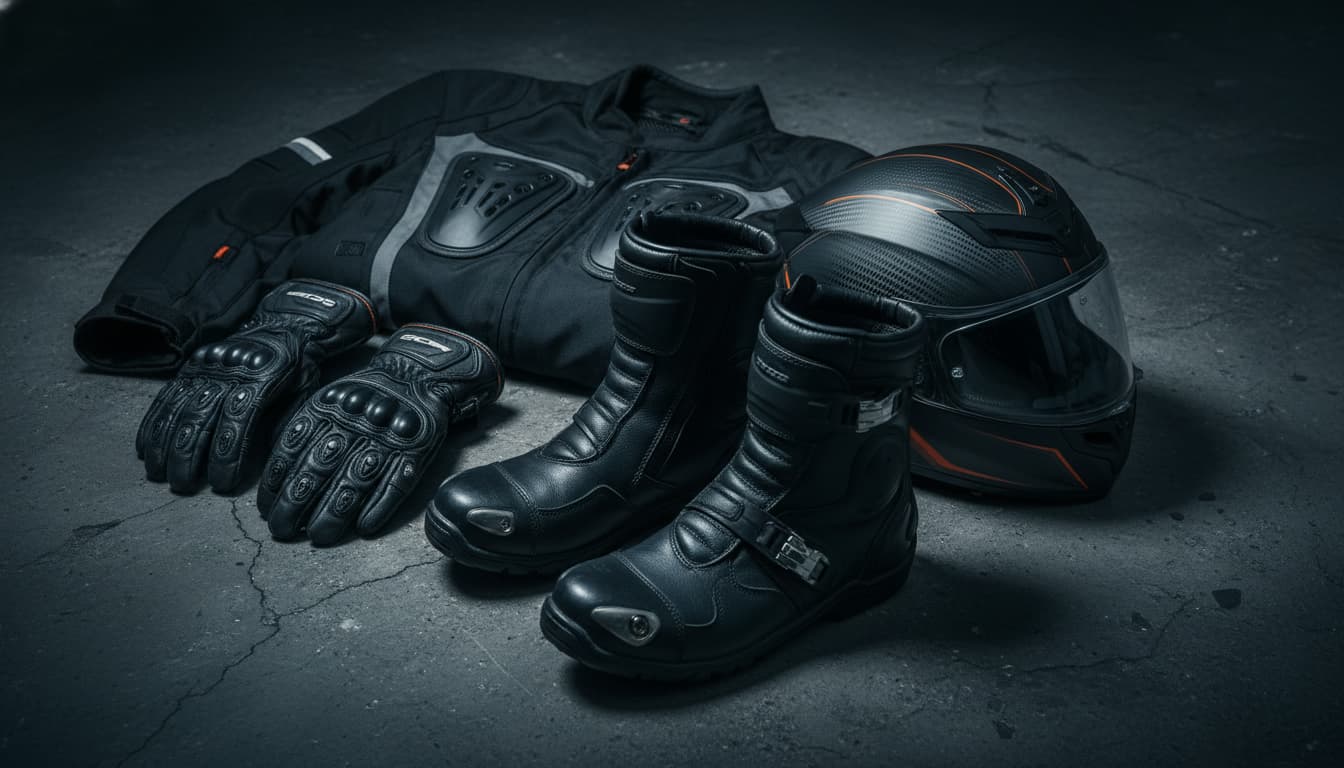
In short, what you will discover in this article: the essential motorcycle gear for riding safely and comfortably, adapted to every type of riding. You will learn how to choose the helmet, protections, connected accessories, and manage your budget while respecting standards.
1. Introduction — why proper motorcycle gear matters
Proper motorcycle gear is essential to ensure your safety and comfort on the road. Whether you're a beginner or an experienced rider, having the right motorcycle gear protects you from injuries in case of an accident and improves your riding experience. Additionally, suitable gear helps you face weather conditions and long distances with peace of mind.
2. Essential gear for safety
2.1 The helmet — types, standards, and choices (full-face, modular, open-face)
The helmet is the most important motorcycle gear. It must be certified according to CE or ECE standards to guarantee optimal protection. You can choose among several types:
- The full-face helmet, offering the best complete face protection.
- The modular helmet, handy for switching between protection and comfort.
- The open-face helmet, lighter but offers less face protection.
The choice depends on your riding style and comfort, but safety always remains the priority.
2.2 Body protection — jacket, back protector, pants
Body protection includes the motorcycle protective jacket, back protector, and reinforced motorcycle pants. The leather motorcycle jacket is highly appreciated for its durability and style, but reinforced textiles often offer more ventilation and versatility. The back protector shields the spine, an element not to be overlooked. Reinforced pants complete leg protection, often forgotten but crucial.
2.3 Gloves and boots — safety and comfort criteria
Motorcycle gloves must ensure good grip while protecting joints and skin. Motorcycle boots protect the feet and ankles, vulnerable areas in case of falls. Choose certified models that are comfortable and suited to your riding style.
3. Gear according to riding style
3.1 Road / touring — comfort and long-distance accessories
For road and touring, prioritize comfortable and ventilated gear with motorcycle accessories such as bags or locks. A lighting kit for the motorcycle is also important for visibility during night rides.
3.2 Sport — reinforced protection and ergonomics
Sport riding requires reinforced gear, notably a leather motorcycle jacket with integrated protections, reinforced gloves, and racing boots. Ergonomics are key to ensuring freedom of movement and safety.
3.3 Trail / off-road — specific protection and waterproofing
Trail riding demands specific gear, often lighter and water-resistant. Boots and gloves must be waterproof and robust to handle tough terrains.
3.4 Urban / scooter — practicality and security locks
In urban environments, practicality is key. Opt for lightweight, easy-to-wear gear, and don't forget an effective security lock among your motorcycle accessories to protect your vehicle.
4. Connected and technological gear
4.1 Bluetooth helmets and intercoms
Bluetooth helmets with communication systems make it easy to stay connected with other riders and allow you to listen to music or GPS without taking your eyes off the road.
4.2 HUD, sensors, and assistive systems (TPMS, trackers)
High-tech gear like HUDs (heads-up displays), tire pressure sensors (TPMS), or GPS trackers enhance safety and help monitor your motorcycle.
5. Buying criteria and budget
5.1 Durability, maintenance, and value for money
Investing in durable and easy-to-maintain gear guarantees consistent protection. Value for money should be assessed based on frequency of use and riding style.
5.2 Comparisons and price ranges (entry / mid / high-end)
There are different ranges:
- Entry-level: basic gear, often sufficient for beginners.
- Mid-range: good balance between comfort, safety, and price.
- High-end: innovative materials, reinforced protections, integrated technologies.
For a complete selection, check specialized catalogs such as Dafy Moto.
6. Compliance, standards, and insurance
6.1 Understanding CE/ECE standards and certification
CE and ECE standards ensure motorcycle gear meets strict safety criteria. A non-certified helmet or vest could compromise your protection and lead to penalties.
6.2 Impact on warranties and insurance reimbursements
Wearing certified gear is often a condition to receive reimbursements in case of an accident. It also affects the validity of your insurance.
7. Maintenance and storage of gear
7.1 Cleaning, inspection, and replacement of protections
Proper maintenance extends the life of your gear. Regularly clean your jacket, gloves, and helmet, and replace them after impact or visible wear.
8. Distinctive ideas to explore
8.1 Eco-friendly solutions and innovative materials
More and more manufacturers offer eco-responsible motorcycle gear using recycled or sustainable materials without compromising safety.
8.2 Customization and modularity of gear
Modularity allows adapting your gear to conditions (summer/winter, city/countryside). Customization offers a unique style while maintaining protection.
9. Conclusion and call to action
Choosing your motorcycle gear well is the key to ride safely and fully enjoy every trip. To prepare your adventure, don't hesitate to consult our comprehensive guide on motorcycle travel gear and compare products on specialized sites like Speedway. Gear up smartly and ride with peace of mind!