How to Choose and Maintain a Motorcycle Exhaust Pipe in 2026
01/05/2026
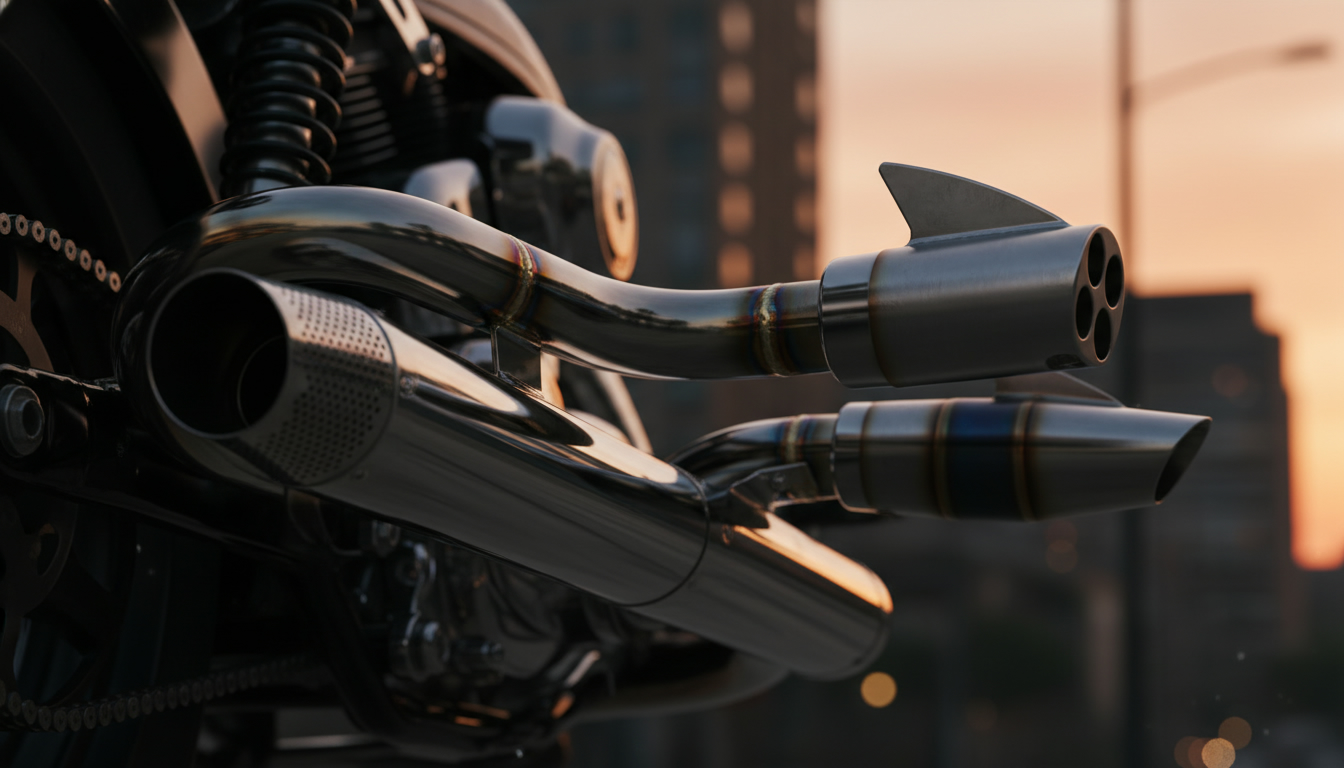
En bref, ce que vous allez découvrir dans cet article : les caractéristiques essentielles du pot d’échappement moto, les différents types disponibles, comment choisir le modèle adapté à votre moto, ainsi que des conseils pratiques pour son entretien et son installation. Vous trouverez aussi des pistes pour un achat éclairé, en toute légalité.
1. Qu'est-ce qu'un pot d'échappement moto ?
Le pot d’échappement moto est un composant clé du système d’échappement moto. Il sert à évacuer les gaz brûlés du moteur tout en réduisant le bruit et en optimisant les performances. Ce dispositif comprend plusieurs éléments, dont le collecteur d’échappement moto, le catalyseur pour moto, et le silencieux de moto. Ensemble, ils influencent la puissance, la sonorité et la conformité aux normes environnementales.
Le choix du pot d’échappement impacte non seulement le style et le son de votre moto, mais aussi sa performance et son respect de la législation.
2. Types de pots d'échappement
2.1 Pot d'origine vs aftermarket
Le pot d'origine est conçu pour répondre aux normes constructeur, garantissant homologation et fiabilité. En revanche, le pot d’échappement adaptable offre souvent un look plus agressif et des gains de performance, mais peut nécessiter une vérification d’homologation.
2.2 Silencieux, pots racing, cross, touring
- Le silencieux de moto : réduit le bruit, disponible en plusieurs matériaux (inox, carbone, titane).
- Le pot d’échappement sport : privilégie la performance et une sonorité plus marquée, souvent utilisé en compétition.
- Les pots pour cross ou off-road : conçus pour résister aux conditions extrêmes, souvent passage haut.
- Les pots touring : orientés confort et longévité pour les voyages.
2.3 2-en-1, 4-en-1, slip-on vs full system
- 2-en-1 et 4-en-1 : combinent plusieurs sorties de cylindres en une seule, améliorant le flux des gaz.
- Slip-on : remplacement du silencieux uniquement, installation simple.
- Full system (ligne complète) : remplace tout le système, offre des gains de poids et de puissance, mais demande souvent une reprogrammation moteur.
3. Comment choisir son pot d'échappement
3.1 Critères de choix
Pour bien choisir un pot d’échappement moto, plusieurs critères sont à considérer :
- Matériau : l’inox est durable et résistant à la corrosion, le carbone est léger mais sensible à la chaleur, le titane est haut de gamme.
- Poids : un pot plus léger améliore la maniabilité.
- Gains de puissance : certains pots optimisent le couple et la puissance.
- Sonorité : selon vos préférences, du discret à l’agressif.
- Homologation : indispensable pour un usage légal sur route.
- Budget : les prix varient selon la marque et la technologie.
3.2 Compatibilité moto et montage
Il est crucial de vérifier que le pot d’échappement est compatible avec votre modèle de moto. Le montage peut nécessiter des adaptations, notamment pour les pots adaptables. Pour un projet de voyage, comme un road trip, un pot fiable et facile à entretenir est recommandé.
Pour approfondir la préparation de votre moto avant un grand voyage, consultez notre guide complet sur la préparation voyage moto.
4. Performance et réglages
4.1 Gains attendus et tests dyno
Changer le pot d’échappement peut améliorer le rendement moteur, notamment en réduisant la contre-pression. Les tests sur banc de puissance (dyno) permettent de mesurer ces gains.
4.2 Cartographie ECU et réglage carburateur
Après installation d’un pot sport ou d’une ligne complète, une reprogrammation de l’ECU ou un réglage du carburateur est souvent nécessaire pour optimiser les performances et éviter les problèmes moteur.
5. Sonorité et réglementation
5.1 Mesure en dB et limites légales
Le niveau sonore est réglementé. Un pot trop bruyant peut entraîner des amendes et des contrôles. Les pots homologués garantissent un respect des normes en vigueur.
5.2 Homologation et risques
Utiliser un pot d’échappement non homologué expose à des sanctions, voire à des problèmes d’assurance en cas d’accident. Il est donc conseillé de privilégier un pot d’échappement homologué, surtout pour un usage routier.
6. Entretien et durée de vie
6.1 Corrosion, soudure, pièces d'usure
L’entretien du pot d’échappement moto est essentiel pour prolonger sa durée de vie. L’inox résiste mieux à la corrosion, tandis que les pots en carbone nécessitent plus de précautions. Vérifiez régulièrement les soudures et les fixations.
6.2 Conseils d'entretien et garantie
- Nettoyez le pot après chaque sortie, surtout en conditions humides.
- Évitez les chocs et les projections.
- Respectez les recommandations constructeur pour la garantie.
Pour plus de conseils pratiques sur l’entretien, découvrez notre article dédié à l’entretien du pot d’échappement moto.
7. Marques et comparatif
7.1 Comparatif par usage
- Route : LeoVince, Akrapovič, Mivv.
- Compétition : Yoshimura, IXRace.
- Off-road : Arrow, Doppler.
7.2 Rapport qualité/prix
Les marques comme Leovince et Mivv offrent un bon équilibre entre qualité et prix, tandis que Akrapovič et Yoshimura ciblent le haut de gamme.
Voici une liste rapide des avantages par marque :
- Akrapovič : légèreté, sonorité premium.
- LeoVince : polyvalence, prix accessible.
- Mivv : durabilité, look racing.
Pour un achat pratique, vous pouvez consulter la sélection de pots d’échappement moto chez Silverstone Motor.
8. Installer un pot d'échappement
8.1 Tutoriel pas à pas
- Préparez les outils : clés, tournevis, graisse anti-grippage.
- Retirez l’ancien pot en dévissant les fixations.
- Vérifiez l’état du collecteur d’échappement moto.
- Installez le nouveau pot en respectant les couples de serrage.
- Contrôlez l’étanchéité et la fixation.
8.2 Outils nécessaires et pièges à éviter
- Utilisez des outils adaptés pour éviter d’endommager les vis.
- Ne forcez pas sur les fixations.
- Vérifiez la compatibilité pour éviter les fuites.
9. Conclusion
Changer son pot d’échappement moto est une excellente manière d’améliorer le style, la sonorité et la performance de votre moto. En choisissant un modèle adapté, homologué et bien entretenu, vous profiterez pleinement de votre expérience de conduite, que ce soit pour un usage quotidien ou un grand voyage. Pour préparer au mieux votre aventure, n’hésitez pas à consulter nos conseils sur l’équipement moto voyage.
Passez à l’action et équipez votre moto pour le prochain road trip !

Marc Durand
Motard passionné et voyageur chevronné, je parcours les routes d'Europe et d'ailleurs depuis plus de quinze ans à moto. Cette expérience m'a permis de découvrir les itinéraires les plus emblématiques ainsi que les astuces indispensables pour préparer un road trip réussi. Sur 2motospouruntourdumonde.com, je partage conseils pratiques, comparatifs de motos adaptées au voyage et récits d'aventures pour accompagner tous les passionnés, du novice au motard confirmé. Mon objectif est d'aider les lecteurs à vivre pleinement leur passion du voyage à deux-roues en toute sérénité et avec plaisir.