How to Transport Gasoline on a Motorcycle Trip 2026
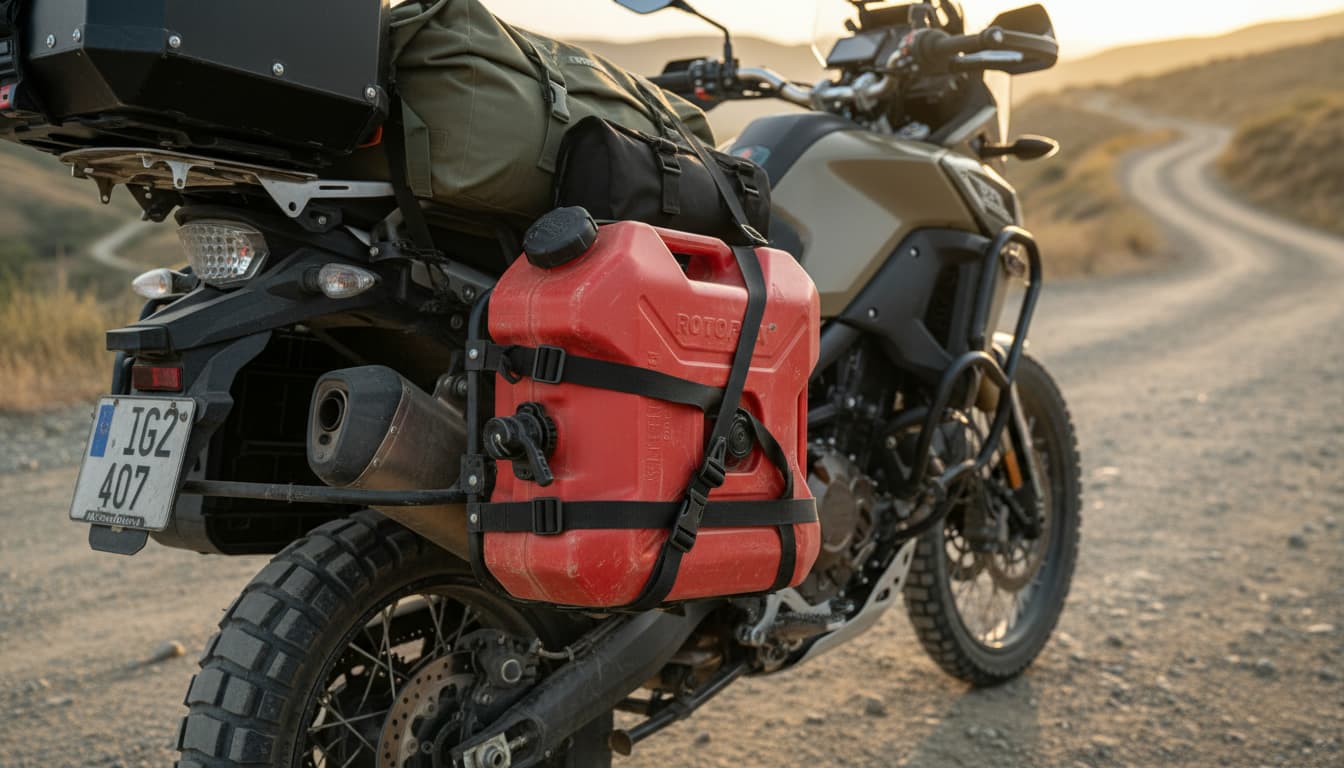
In short, what you will learn in this article: how to safely transport gasoline on a motorcycle trip, suitable containers, regulations to follow, and practical tips for a worry-free road trip.
1. Introduction — why and when to carry gasoline on a motorcycle trip
Carrying a gasoline reserve on a motorcycle trip can be essential. Whether it’s to cross remote areas without stations or to anticipate a breakdown, having a reliable fuel jerry can or motorcycle container ensures extra range. However, transporting fuel requires caution and adherence to rules to avoid any risk.
Carrying gasoline on a motorcycle trip isn’t always necessary, but it’s recommended for long distances or off-network routes. This preparation lets you fully enjoy your adventure without stress.
2. Quick answer — is it safe/legal and what are the main options
Legal transport of fuel by motorcycle is possible under strict conditions. Approved UN/DOT/ADR containers must be used, secured well, and quantity limits respected. The main options include:
- Rigid certified jerry cans, robust and secure.
- Soft fuel bladders, compact and lightweight.
- Integrated auxiliary tanks, for optimal autonomy.
These solutions ensure safety when transporting gasoline, provided appropriate precautions are followed.
3. Regulations and legal precautions
3.1 General rules in France / EU
Gasoline transport is governed by the European ADR Agreement. For motorcycles, the maximum quantity is limited to 60 liters per container, with a total not exceeding 333 liters. Containers must bear the UN symbol and be certified for transporting dangerous goods.
Smoking is strictly prohibited, engines must be turned off during handling, and leaks or openings while riding must be avoided. Storage should be ventilated and isolated from other luggage to minimize fire risks.
3.2 Transport abroad, airplane, and other restrictions
Rules vary by country and mode of transport. For example, carrying gasoline on a plane is strictly forbidden. For international trips, check local regulations and adapt your equipment accordingly.
For more details on regulations, see the full article on legal fuel transport by motorcycle.
4. Comparison of options for transporting gasoline
4.1 Certified rigid jerry cans and containers — pros and cons
Rigid containers, often made of hard plastic or steel, provide excellent shock resistance and reliable sealing. They are easy to mount on the motorcycle using specific mounts. Their drawback is their weight and bulk, especially when full.
4.2 Soft fuel bladders — when to choose them
Soft bladders, like the Desert Fox, are ideal for long trips requiring a compact reserve. They fold once empty, saving space. Their flexibility can make mounting more challenging and requires care to prevent leaks.
4.3 Auxiliary tanks and integrated solutions
Some adventure motorcycle models allow installation of certified auxiliary tanks. This integrated solution optimizes autonomy without crowding luggage. It requires a higher investment and professional installation.
4.4 Alternatives (planning, sharing, stations)
Finally, the best alternative remains thorough planning of stops and resource sharing with other riders. Identifying stations along your route reduces the need to carry excess gasoline.
5. Choosing the right capacity and calculating your reserve
5.1 Autonomy calculation formula + examples
To determine the needed capacity, use this simple formula:
Gasoline reserve (L) = Average consumption (L/100 km) × Distance without station (km) ÷ 100
For example, if your motorcycle consumes 5 L/100 km and the distance without a station is 150 km, plan at least 7.5 L of reserve.
5.2 Influencing factors (terrain, load, weather conditions)
Keep in mind that consumption may increase in mountains, with heavy load, or cold weather. Plan a safety margin to avoid any breakdown.
6. Safety: handling, storage, and mounting on the motorcycle
6.1 Avoiding leaks and vapor buildup
Use exclusively certified motorcycle containers with tight caps and check valves. Inspect regularly for any wear. Never fill to the brim to allow fuel expansion.
6.2 Secure mounting locations for a container
Ideal locations include:
- On the rear luggage rack, with a sturdy mount.
- Inside a top case or hard suitcase, ensuring insulation.
- On the sides, with specific anti-vibration straps.
6.3 Recommended fastenings (straps, mounts, top case) and pre-departure checks
Always secure the container with strong, non-slip straps. Check stability before each departure. For more equipment advice, see our complete guide on motorcycle travel gear.
7. Safe refilling — equipment and procedures
7.1 Recommended tools (pump, filtering funnel, check valve hose)
For clean refilling, use:
- A suitable manual or electric pump.
- A filtering funnel to avoid impurities.
- A check valve hose to prevent spills.
7.2 Step-by-step for a clean transfer
- Turn off the engine and keep away from any spark source.
- Place the container on a stable surface.
- Insert the filtering funnel into the tank.
- Transfer slowly while controlling the flow.
- Clean up any spills immediately.
8. Maintenance, storage during the trip, and periodic checks
During the trip, regularly check the condition of containers and their mounting. Store them away from excessive heat and impacts. After each use, clean and dry the containers to avoid corrosion or contamination.
9. Practical tips and traveler tricks (prevent theft, reduce risks)
- Use locks to secure your containers.
- Avoid leaving gasoline in direct sunlight.
- Prefer soft containers to reduce noise and vibrations.
- Share your experience and tips on forums like Terre et Bitume.
10. Conclusion
Transporting gasoline on a motorcycle trip requires rigor, choosing suitable containers, and following legal rules. By following these tips, you ensure your safety and autonomy to fully enjoy your road trip. To better prepare your adventure, don’t hesitate to consult our article on motorcycle trip preparation.
Printable checklist: certified container, secure mounting, transfer tools, regulation compliance, pre-departure check.
To equip your motorcycle with certified and reliable jerry cans, check out our selection of certified motorcycle jerry cans and enjoy enhanced autonomy with total safety.